Overview
The ascent of the mighty Mount Ama Dablam via the Southwest Ridge, is one of the most beautiful climbs in the Himalaya of Nepal. Ama Dablam, at 6812 meters, might be less in height compared to other 7000m mountains but is compensated by its technical challenges. Perhaps the trickiest part of the climb is a 15-meter vertical section, referred to as the 'Yellow Tower', just below Camp II.
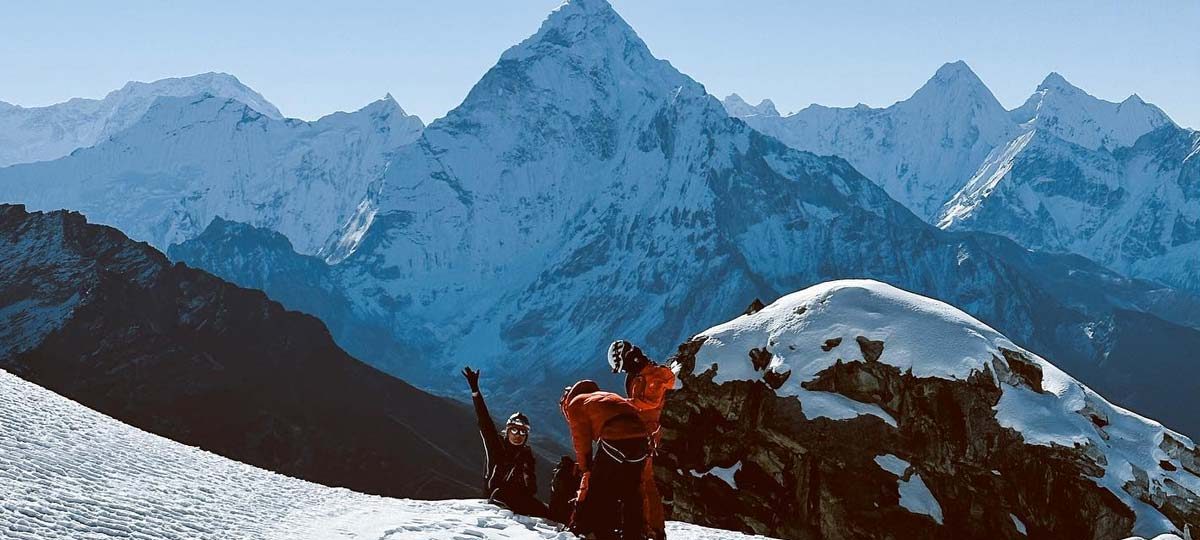
Ama means 'Mother' and Dablam means 'Jewel'. Ama Dablam is beautifully adorned by two ridges of snow joined by a hanging glacier that looks like the jewel, just as the traditional necklace worn by Sherpa Women with a pendant hanging from it. Not only is the mountain itself magnificent, from the summit of Ama Dablam, there are stunning views of Everest as well as Nuptse, Baruntse and Pumari, Lhotse Shar, Makalu and Cho Oyu.
The exciting trekking to Ama Dablam Base Camp winds through the Sherpa homeland above Tengboche monastery. The trail to Ama Dablam base camp branches off of the well-worn path to Everest Base Camp and follows the original line of ascent on the Southwest Ridge. The rocky trail becomes increasingly snowy nearing the approach to the summit of Ama Dablam.
We follow the original line of ascent via the southwest ridge, which is technically challenging (fairly) under normal conditions with enough rock, snow and ice to make it an interesting climb. The amount of snowfall determines the proportions of rock, snow and ice on the trail. The best time for Ama Dablam Expedition is during Autumn season (October and November) when the weather is cold but fairly predictable. Spring season is also possible. The route is less slippery underfoot during colder weather. There are good camp platforms at strategic points. Our competent Local Sherpa climbing team provides technical support and confident leadership during your Ama Dablam Expedition.
Ama Dablam Expedition Strategy:
Advanced Base Camp, 4750m, to Camp I, 5700m
The view from base camp is incredible: a stream meanders through the grassy meadows; the massif of Ama Dablam towers above; the valley Mount Taweche opens below. From here, the path winds eastward through grassy moraine ridges and scree (often icy) until reaching a broad plateau at 5150m, from where you can see the Mingbo La pass. From the plateau the trail leads north and climbs steeply to a large boulder field. We set up Advanced Base Camp, 5300m just below the bolder field.
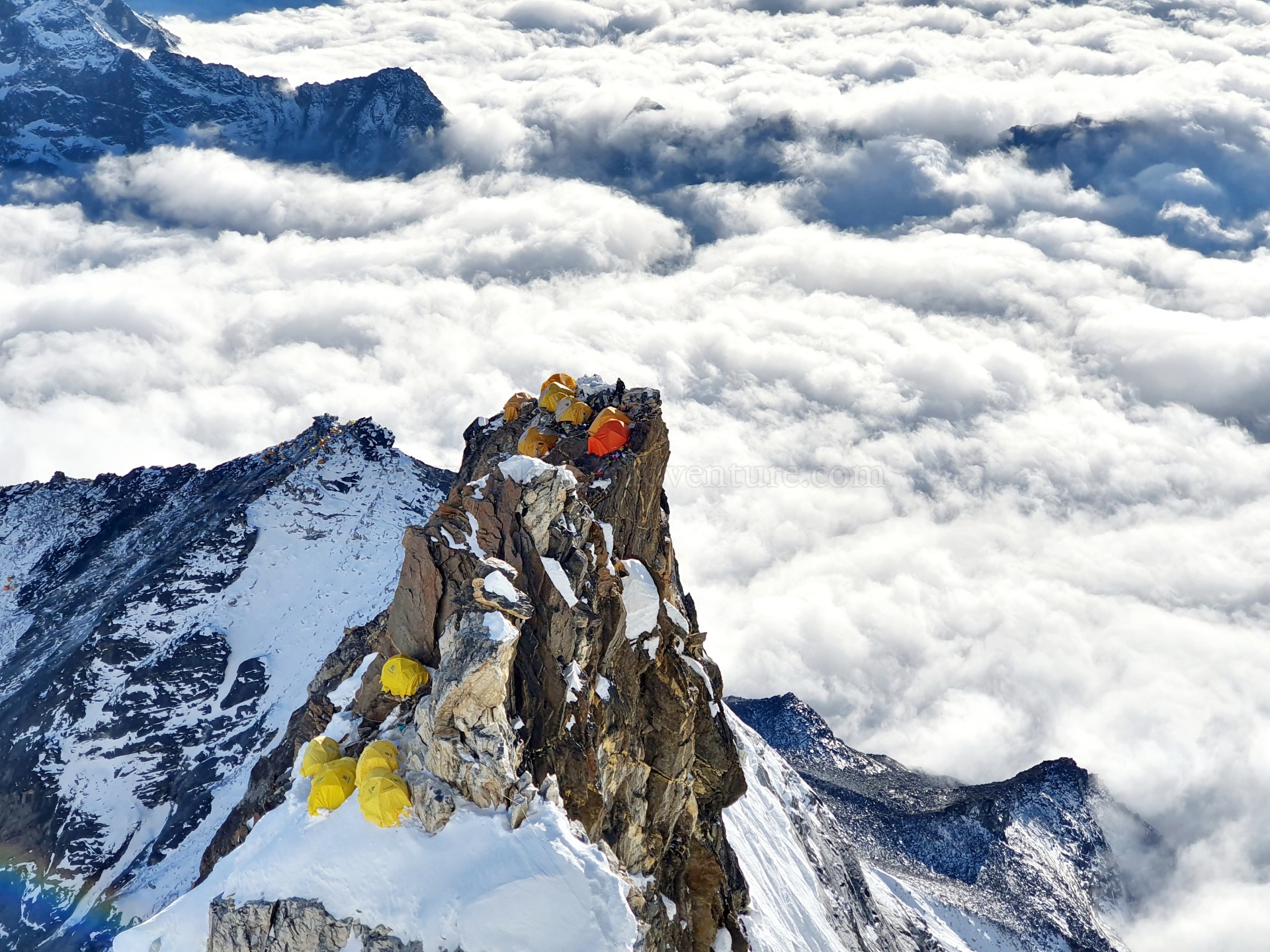
At the end of the boulder field, slabs traverse deep crevices and to access the proper ridge there is an ascent using fixed ropes. An easy scramble up the east side of the ridge reaches Camp I at 5700m, where there are four or five tent platforms.
Camp I, 5700m to Camp II, 5900m
From Camp I, the trail follows an exposed rocky ridge dotted with towering rock fingers. The ridge is narrow at times and more crevices to be traversed on slabs.
Easy ground is followed to the start of a traverse on the east face which leads to the base of Yellow Tower. To reach Camp II, at 5900m, there is a sharp 15-meter pitch where fixed ropes are used. This is the hardest pitch on the climb. Camp II is extremely exposed, and there is very limited tent space.
Camp II, 5900m to Camp III 6300m
From Camp II, the route is more โmixedโ with snow and iced-up rock. The trail skirts an outcropping of red rocks and drops down to follow a snowy ridge, traversing a gorge between the Grey Tower and the lower rock wall. There are some steep snowy sections of this bottomless snowy ravine to negotiate before the trail reaches the popular Mushroom Ridge 6300m, a sheltered spot on the east side of the ridge.
Summit Day: Ama Dablam
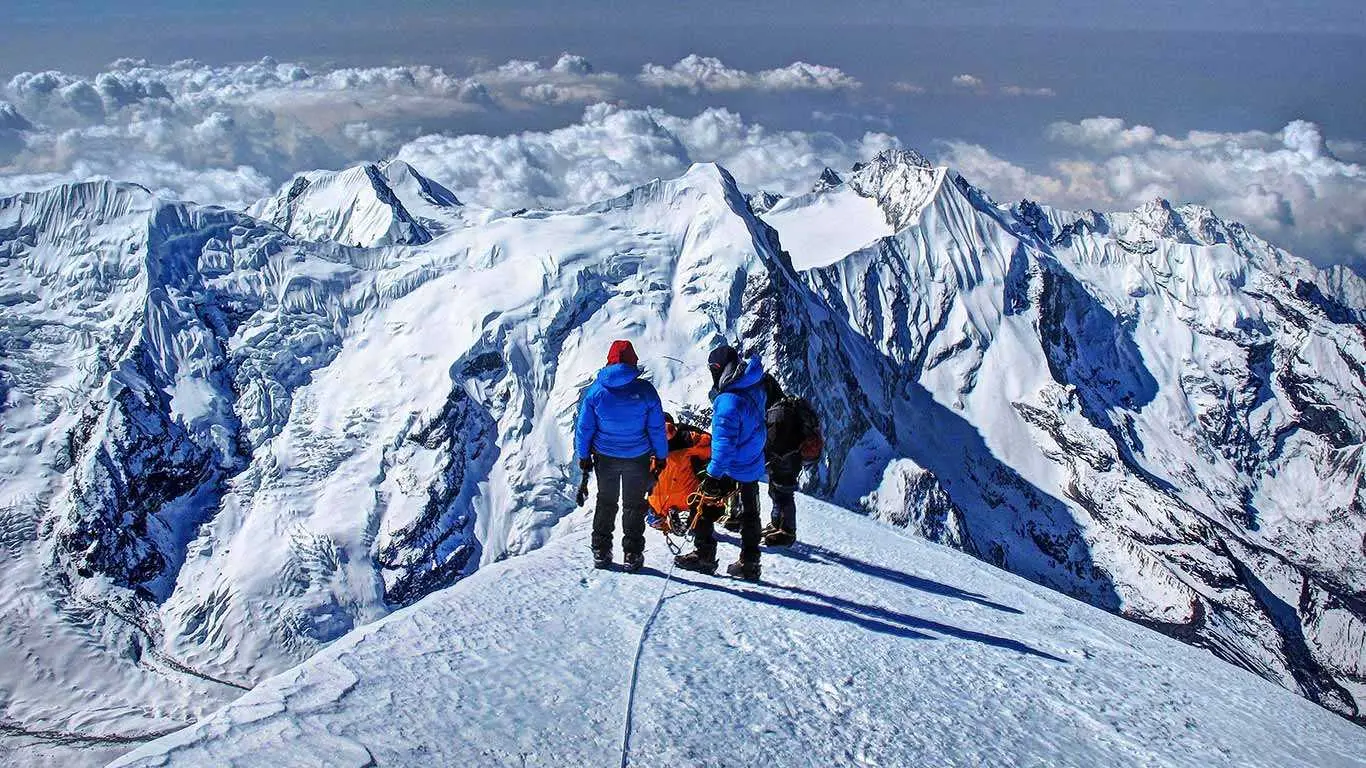
The biggest challenges of Summit Day are the snowy conditions and altitude. The trail climbs above on snow and ice to the east side of Ama Dablam. You continue to skirt the hanging glacier, or Dablam, to a small snowfield and then the climb heads directly up snow slopes to the obvious ice crest. Ice fields lead up to a highly exposed and then meets up with the 40โ60-degree snow rib followed by the magnificent summit. Amazing views of Everest, Nuptse, Baruntse and Pumori, Lhotse Shar, Makalu, Cho Oyu from the summit awaits.
Planning to climb Ama Dablam in 2025 and 2026!!
Guaranteed Departures. We are preparing for our Autumn 2025 dates and groups for Ama Dablam Expediiton. Please get in touch for further details and book your spot for this beautiful climb.
Departure Note:
Guaranteed- We already have trekkers booked for those dates and you can join the group.
Available - The date is available to book and once you confirm your trip it will be guaranteed.
Limited - The departure date is filling fast and only limited seats are available to join.
Closed- The Trip cannot be booked on that specific date. Contact us for customized dates.
The departure dates are your arrival dates in Nepal.
We have set dates for departure to the Ama Dablam Expedition. So, pick your preferable date and let the adventure begin.
If the date you prefer is not listed on our departure dates then you can contact us directly to book the trip on your own desired date.
We have listed the price up to 06 trekkers at maximum. If you are more than 08 climbers, then please feel free to contact us for amazing discounted group price and further booking process.
Private Climb to Ama Dablam Expedition is possible. Contact us to design your own private trips with you loved ones.
Solo Expedition: Single trekkers are always welcome to join the climb. On your arrival at Kathmandu, youโll have a single room in Kathmandu Hotel as per your requirement and have to share a room at the local teahouses during the trekking.
Useful Info Ama Dablam Expedition Packing List:
โThere's no such thing as bad weather, only unsuitable clothing.โ Alfred Wainwright
Are you planning your dream trip to the Himalaya of Nepal? Make sure you have packed well for your hiking, trekking and climbing experiences in Nepal. The time period of your visit also determines your packing list. The best trekking seasons for beginning your Ama Dablam Expedition are spring and autumn. During these seasons, maximum flow of trekkers can be witnessed. Weather during spring (March โ May) and autumn (September โ November) are likely to be mild with clear blue sky and outstanding mountain views. But nights can get freezing cold at higher elevation. So, packing appropriate clothing, gear, and equipments for your Ama Dablam Expedition is a must for lifetime memorable trekking and climbing experience in Everest region of Nepal.
A strategically way of packing will be keeping in mind that your stuffs will be packed in two bags. One will be the daypack that you carry every day on your trek. Pack your daypack as light as possible by carrying only the essentials so that you can relish your moments in wilderness freely. Pack anything you may need each day during your hike in your daypack. Other bag will be your duffle bag which will be carried by your Porter from the very beginning of your trek till the end.
Upper Body:
Warm beanie hat
Tubular Headwear (buff)
Sun Hat or Cap (cap and buff all fit under your hood)
Polarized Sunglasses with UV protection
Headlamp (Black Diamond / Petzl) with spare batteries
Sunscreen with factor 50+
Upper Body (Core body):
3 Light and trekking weight thermal tops
3 T-shirts or cool-max trekking shirts
1 Fleece Jacket or pull over (Merino, soft shell)
1 Waterproof shell jacket with hood (lightweight, breathable)
1 Down Jacket
Lower Body:
2 Thermal base layers (merino or polartec power dry)
2 Pairs trekking pants, preferably that zip on/off at the knees so they double as shorts.
1 Heavy weight hiking trousers (wind proof soft shell for warmth at higher altitude)
1 Waterproof/ Rain pants
2 Light Hiking shorts
2 Fleece Pants
4 Under wears (merino)
Hands:
1 Lightweight gloves or liner gloves
1 Pair shell gloves (Gore-Tex)
1 Waterproof outer glove
Feet:
3 Warm Trekking socks (smart wool)
3 Pairs of liner socks
2 Pairs of thick/ warm socks
2 Thick wool socks to wear at night in lodges
Trekking Boots (waterproof, ankle support with rigid sole)
Lightweight Rubber Shoes / Trainers / Trail Runner to wear at the Tea Houses
Accessories:
1 Daypack (approximately 2500 to 3000 cubic inches) 40 - 50 Liters
2 Water bottle or camel bag, 1-liter (one with an insulated cover is recommended)
Large duffle bag (and a lock as the porters will carry this)
A pair of adjustable Trekking Pole
Camera with extra battery
Sleeping bag (- 15 C depending upon trips)
Sleeping Bag liner
Ear Plugs
Portable Solar Charger
Smart Trekking Watch
Personal First Aid Kit:
Please do note that our trekking guides will be too carrying the first aid kit with them especially for the guests and the entire team. Still, we suggest the following items to be carried with you while trekking in the Himalaya of Nepal.
Personal Medication
Diarrhea Stopper (e.g. Imodium)
Paracetamol Tablets
Small Swiss Army knife (which has knife, scissors and tweezers)
Diamox for altitude (consult your doctor about this)
Water Purification tablets or drops
Blister kit / Zinc Tape
Hand Sanitizer
Dressing Gauze
Antibiotic Cream
Advice for tipping support staffs and Summit bonus for Climbing Sherpa
1.USD 100- 150 for support staff/helpers/ porters, who stay at the base camp / Lukla-base camp - Lukla
2.USD 200 - 300 for Base Camp Cook /Guide who manages the base camp
3.USD 500-800 for Climbing Sherpa who accompanies you up to the top of the summit